From Delivery to a Fully Functional Dyno Cell
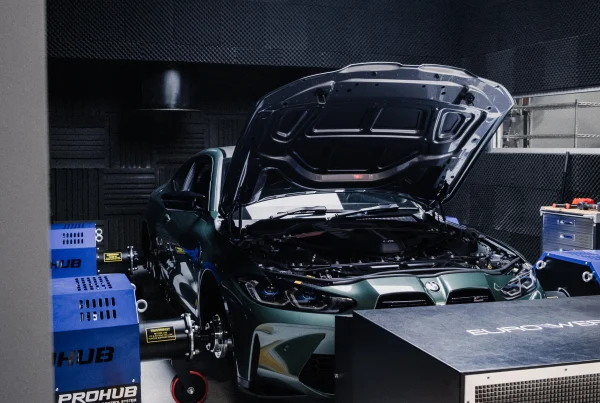
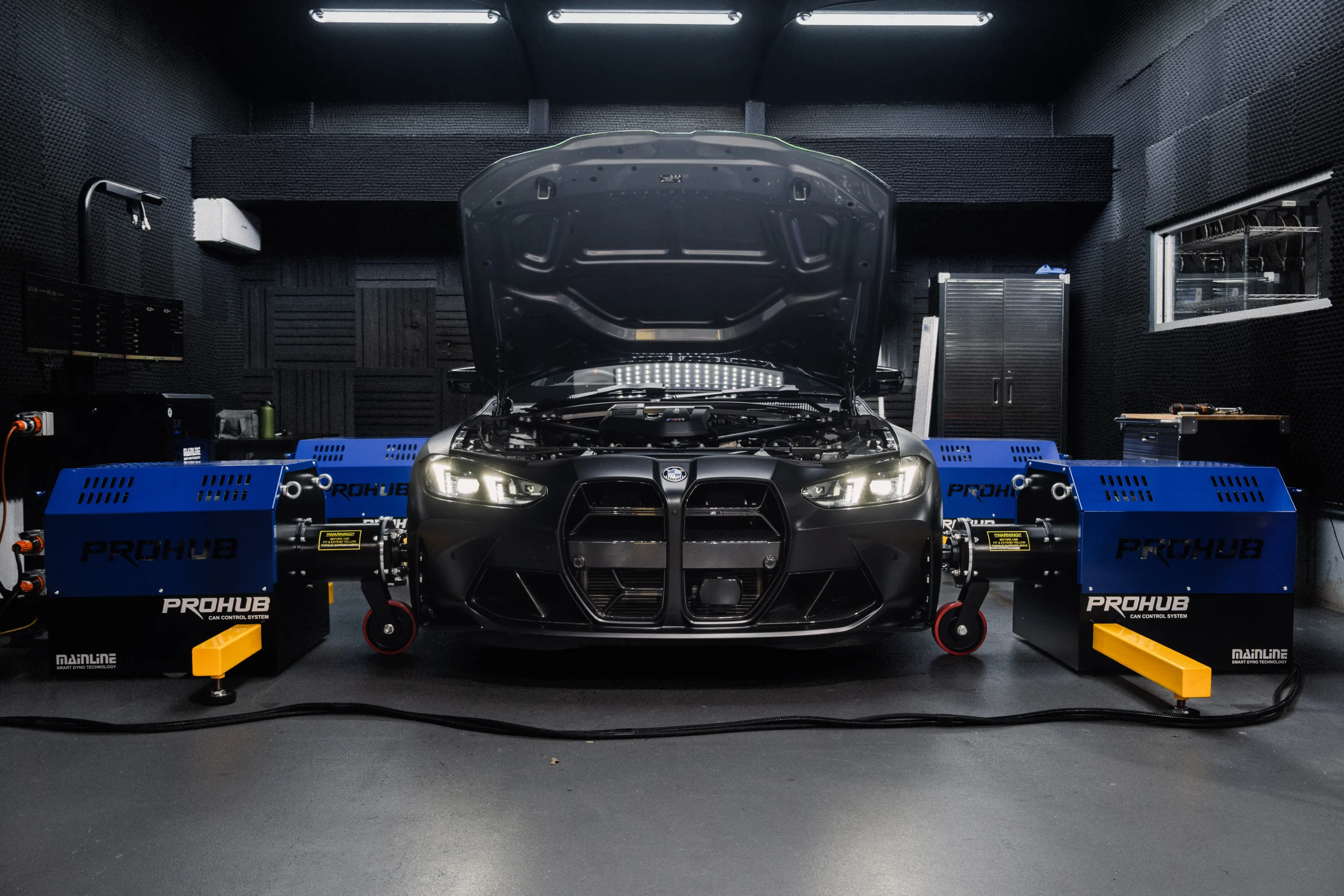
Around four months ago, we took delivery of our Mainline 3600CS hub dyno - a significant step forward in both capability and how we approach performance tuning at Eurowerke.
This wasn’t a simple install. To get the most out of the dyno, we built an entirely new dyno cell around it, designed to support everything from daily-driven performance cars through to high-output builds.
Since bringing it online, it’s been in constant use - and it’s changed how we approach tuning completely.


By the Numbers
Since November, we’ve had just over 55 cars through the dyno cell.
Across roughly 90 working days, with most vehicles spending around two days on the dyno, that equates to approximately 110 dyno days of use - putting us at just over 120% utilisation.
That level of demand tells its own story.


Why We Made the Change
Moving to a Mainline 3600CS hub dyno wasn’t about chasing numbers - it was about improving accuracy, consistency, and removing the limitations we were starting to run into.
We weren’t upgrading for the sake of it - we’d simply outgrown what we had.
True All-Wheel Drive Capability
The ability to connect directly to all four hubs allows us to tune all-wheel-drive vehicles properly, without the variables that come with roller dynos. There’s no tyre slip, no inconsistent load between axles, and far greater repeatability from run to run.
For modern platforms like BMW xDrive, Audi Quattro, and performance SUVs, this level of control isn’t a luxury - it’s a requirement.
Cleaner Setup and Better Workflow
The Mainline system removes the need for water cooling, which simplifies the entire process. There’s no mess, no added complexity, and a much cleaner working environment overall.
Combined with the layout of the new dyno cell, it’s made day-to-day operation more efficient and easier for the team to manage.
No More Power Limits
Our previous dyno did what we needed - until it didn’t.
As vehicle output increased, we started running into the dyno’s limitations before the car’s. That’s not a position you want to be in when you’re developing higher horsepower builds.
With the Mainline, that ceiling is gone - allowing us to focus entirely on the vehicle rather than working around the equipment.

A Range of Vehicles Through the Cell
Over the past four months, we’ve seen a wide range of vehicles through the dyno cell - from modern BMW M platforms through to performance SUVs and other high-output applications.
This has included:
Ford Raptor (V6TT)
BMW X3 M Competition (F97)
Porsche 911 GT3 (992)
BMW M3 Competition (G81)
This is the type of work we’re seeing every week now - higher output cars, more complex platforms, and more demand for proper, data-driven tuning.

A Dyno Is a Tool - Not a Trophy
It’s easy to get caught up in peak power numbers, but that’s not how we approach tuning.
A dyno is simply a tool - its job is to measure change. What actually matters is the difference between where a car starts and where it finishes, not a single peak number taken in isolation.
A big number means nothing if it can’t be repeated.
On a hub dyno, there’s very little room to manipulate results. We’re not adjusting ramp rates or chasing inflated figures for the sake of a screenshot. Every car is tested under the same conditions, before and after, so the gains are clear, measurable, and repeatable.
We’re not interested in numbers that look good once. We’re interested in results that actually translate on the road - consistent improvements that make the car genuinely better to drive.
That’s why every car we tune is backed by proper before and after dyno data. No excuses, no guesswork - just real results.

DYNO GRAPH: Flex Fuel BMW M2 (S58) – Stock vs 98 Octane vs E50

DYNO GRAPH: Stage 1 Custom Tune Ford Ranger Raptor – Stock VS Tuned 98 Octane
Ongoing Refinement
Even with the dyno fully operational, there’s still ongoing refinement happening behind the scenes.
We continue to improve airflow, layout, and overall efficiency within the dyno cell. Like everything in the workshop, it’s something that evolves over time as we continue to learn and improve.


Four Months In
Four months in, it’s already clear - this wasn’t just an upgrade, it was a necessity.
The Mainline dyno has become a core part of how we operate, allowing us to work with greater accuracy, improved consistency, and without the limitations we previously faced.
Just as importantly, it allows us to provide clear, reliable data to back up every result - which is what this investment was always about.


Frequently Asked Questions
What is a hub dyno and how is it different to a roller dyno?
A hub dyno connects directly to the vehicle’s wheel hubs rather than running on rollers. This removes variables like tyre slip and allows for more accurate, repeatable results - especially for all-wheel-drive vehicles.
Why is a hub dyno better for AWD vehicles?
With a hub dyno, all four wheels are connected directly, allowing for true all-wheel-drive tuning without inconsistencies between axles. This provides better control and more reliable data compared to traditional roller dynos.
Do dyno results vary between different dynos?
Yes - different dynos can produce different figures depending on how they are set up and used. That’s why we focus on before and after results on the same dyno, under the same conditions, rather than comparing peak power numbers from different setups.
How long does a dyno tuning session take?
Most vehicles are on the dyno for around two days, depending on the setup and level of tuning required. This allows us to properly develop and validate the custom ECU tune rather than rushing the process.
Why is before and after dyno data important?
Before and after testing shows the true gains made from tuning. It removes guesswork and ensures that improvements are measurable, consistent, and repeatable, translating to better real-world performance.
Can you tune high horsepower or heavily modified cars?
Yes - our Mainline hub dyno has no practical power ceiling, allowing us to safely tune high-output and heavily modified vehicles without the limitations of older systems.
Want Custom ECU Tuning Done Properly?
Unlock the full potential of your vehicle with a custom ECU tune tailored specifically to your setup. From mild upgrades through to full performance builds, we calibrate each car to deliver stronger, smoother, and more consistent performance.
Every tune is developed in-house using our Mainline hub dyno, allowing us to accurately measure real before and after gains - not just chase numbers. The result is a car that doesn’t just make more power, but drives better in every condition.